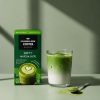
Matcha made properly at home usually means a bamboo whisk, a wide bowl, a sieve to break up the clumps, and a technique nobody teaches you. Skip any of it and you get a bitter, lumpy drink and a green ring round the cup.
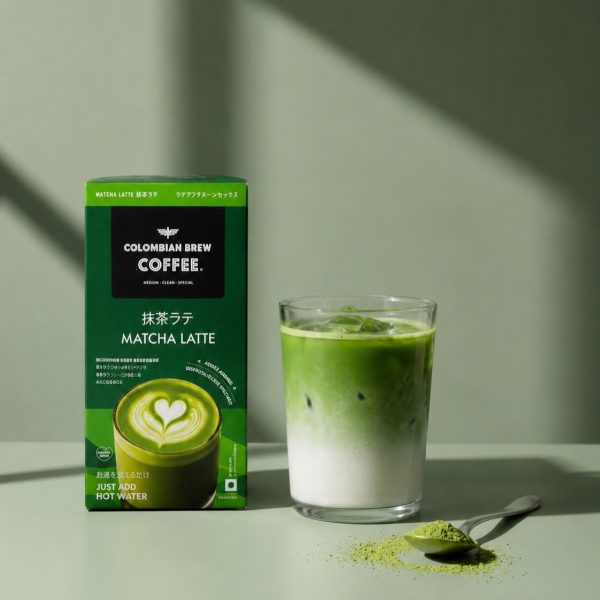
This is a premix, so the green tea, the milk and the sweetness are already blended. It goes straight into the cup, dissolves, and comes out as a smooth matcha latte — grassy and creamy rather than sharp.
Choosing hot or iced
Hot. Made with hot water, or with hot milk for something richer. Best somewhere between 70 and 80°C — very hot water is what makes matcha turn bitter, so a kettle left to stand for a minute gives a better result.
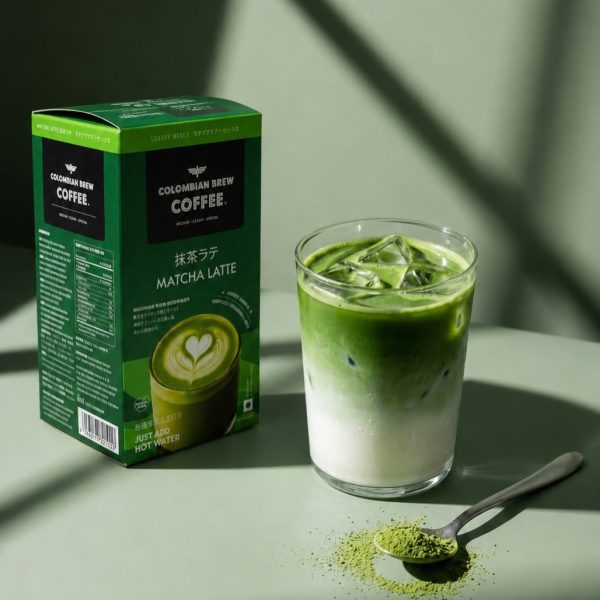
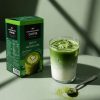
Iced. Made for cold water or cold milk over ice. This is the version that turns up in cafés all summer and costs five pounds a glass.
How to make it
Hot: tear into a cup, add hot water, stir until smooth.
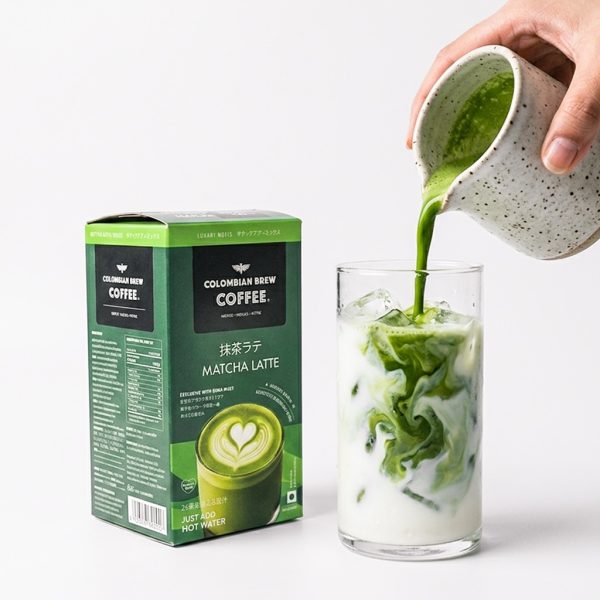
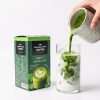
Iced: tear into a glass, add a splash of cold liquid and stir to a paste, then add the rest and ice. The paste step is what keeps it smooth — worth the extra ten seconds.
Who it’s for
Anyone buying matcha lattes out and wincing at the price. Cafés wanting matcha on the menu without a matcha station, a whisk and staff training. Offices where someone doesn’t drink coffee and has been making do with tea.
Ingredients, allergens and nutrition
[CLIENT TO SUPPLY — full ingredient list, allergen declaration and nutritional information per 100g and per serving. Legally required before sale.]
Storage
Store in a cool, dry place away from direct sunlight. Reseal or keep sachets sealed until use. See pack for best-before date.